Cupping, Crowning and Buckling in Hardwood
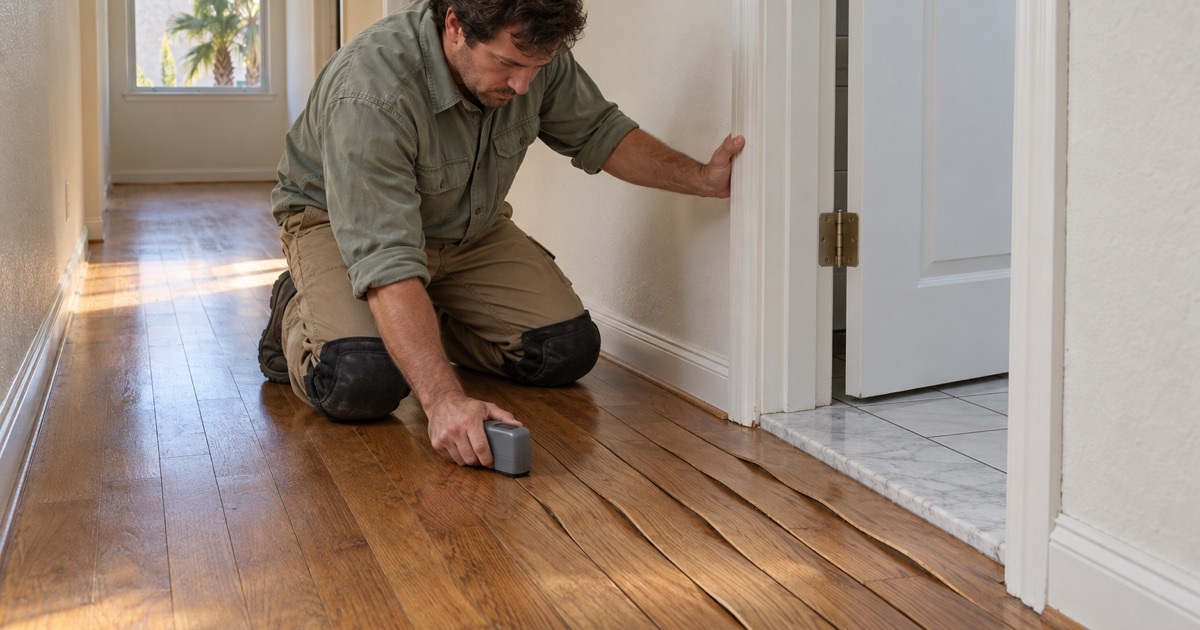
Cupping is board edges sitting higher than the centers, usually from moisture underneath; crowning is the reverse, often from sanding a cupped floor too soon; buckling is boards lifting off the subfloor entirely. We take moisture readings to find the source before touching the surface, because sanding a cupped floor while it is still wet only turns it into a crowned one later.
Gaps Opening Between Boards
Narrow gaps that open in dry months and close in humid ones are normal seasonal movement in solid wood. Wider gaps, or gaps that never close, point to a floor installed too wet, failed fasteners or a moisture change underneath, and we check which before filling anything. Filler packed into a seasonal gap just cracks back out.
Squeaks and Sound Reaching the Unit Below
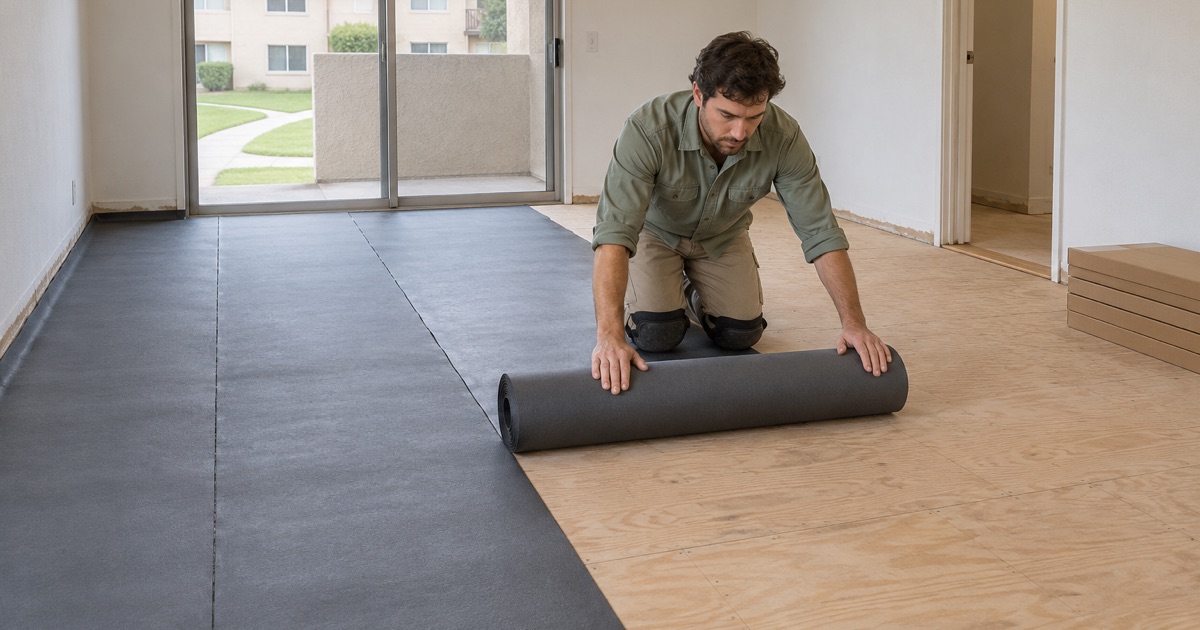
Squeaks usually come from boards or subfloor panels rubbing on loose nails or moving over a joist. We refasten from above or below where we can reach, and in upstairs units we look at whether the underlayment is doing its job. A quieter floor matters most when someone lives underneath it.
Soft Subfloor Near Bathrooms, Kitchens and Doors
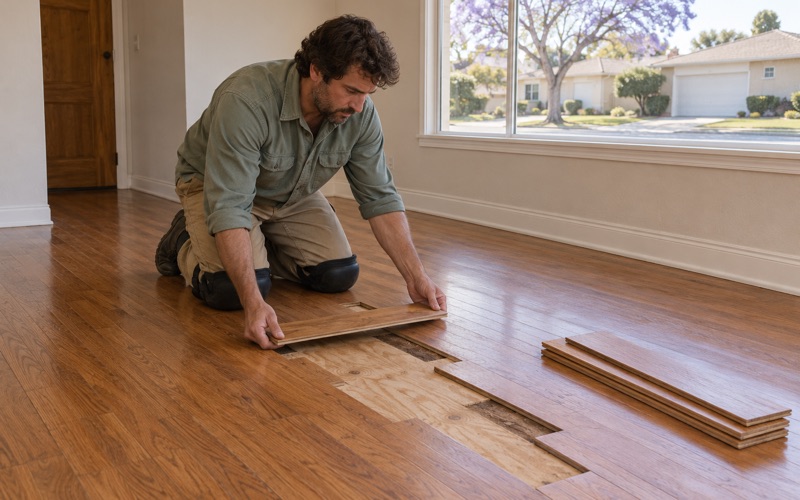
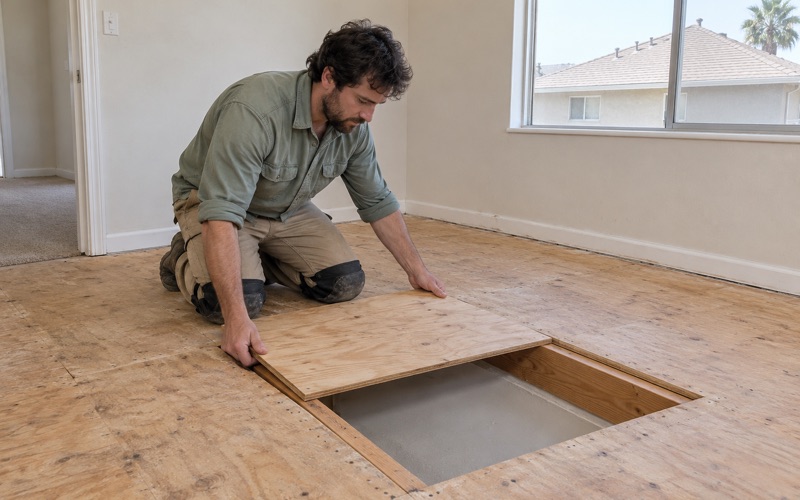
A floor that gives underfoot near a toilet, sink or exterior door often means the plywood subfloor has been wet long enough to delaminate or rot. We open the area, cut the damaged sheathing back to sound material and replace it before new boards go in. Laying wood over a soft spot hides it for a few months at most.
Water Damage From Dishwashers, Water Heaters and Pipes
Appliance and supply-line leaks soak into boards and subfloor from below, so the surface can look fine while the damage spreads. We trace the water to its source, measure how far it reached, dry what can be saved and replace what cannot. Photos and readings go into the file for your records or your insurer.
Slab Leaks Showing Up as Warm or Wet Boards
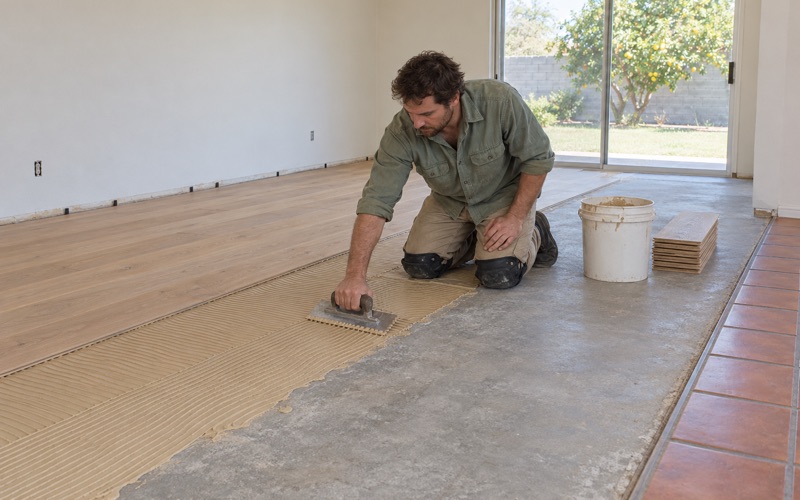
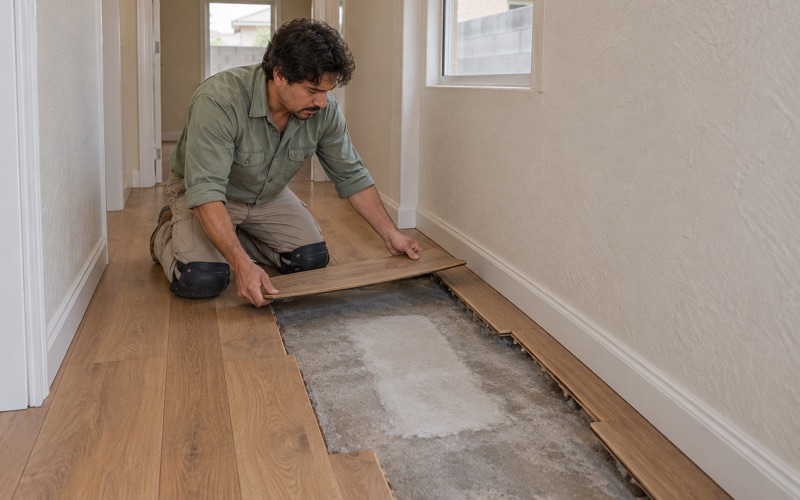
A warm patch underfoot, or moisture seeping up between boards on a concrete floor, can signal a hot-water line leaking under the slab. Once leak detection and the plumber have found it, we remove only the boards needed for access, let the slab dry and weave matching boards back in. That keeps a pipe repair from becoming a whole new floor.
Termite Damage in Hardwood Boards
Drywood termites leave small piles of pellet-like frass and boards that sound hollow or crumble at the edges. We hand treatment to a pest control company, then cut out the damaged boards and replace them with matching stock once the colony has been dealt with. Replacing wood before treatment only gives the termites new material.
Pet Urine Stains in the Wood
Urine that has soaked past the finish turns oak gray or black, and it often cannot be sanded out because the stain runs deep into the grain. We test whether sanding will lift it, and where it will not, the affected boards are replaced with a weave-in repair. Bleaching and covering usually leaves both a stain and a smell behind.
Peeling, Hazy or Worn-Through Polyurethane
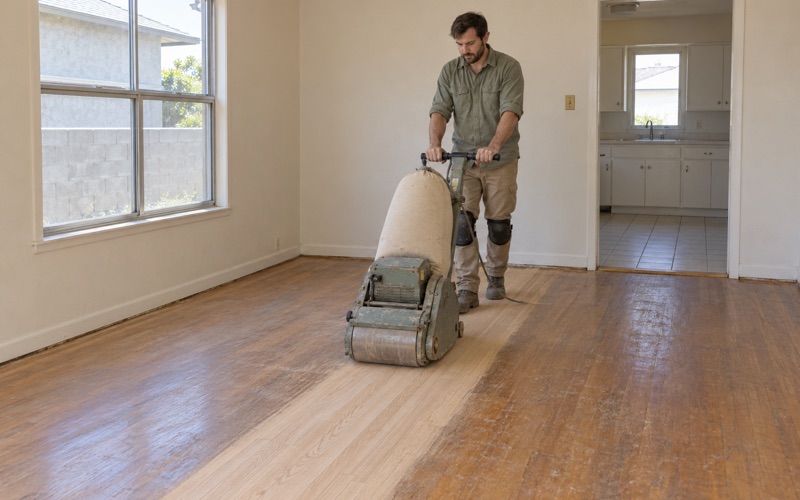
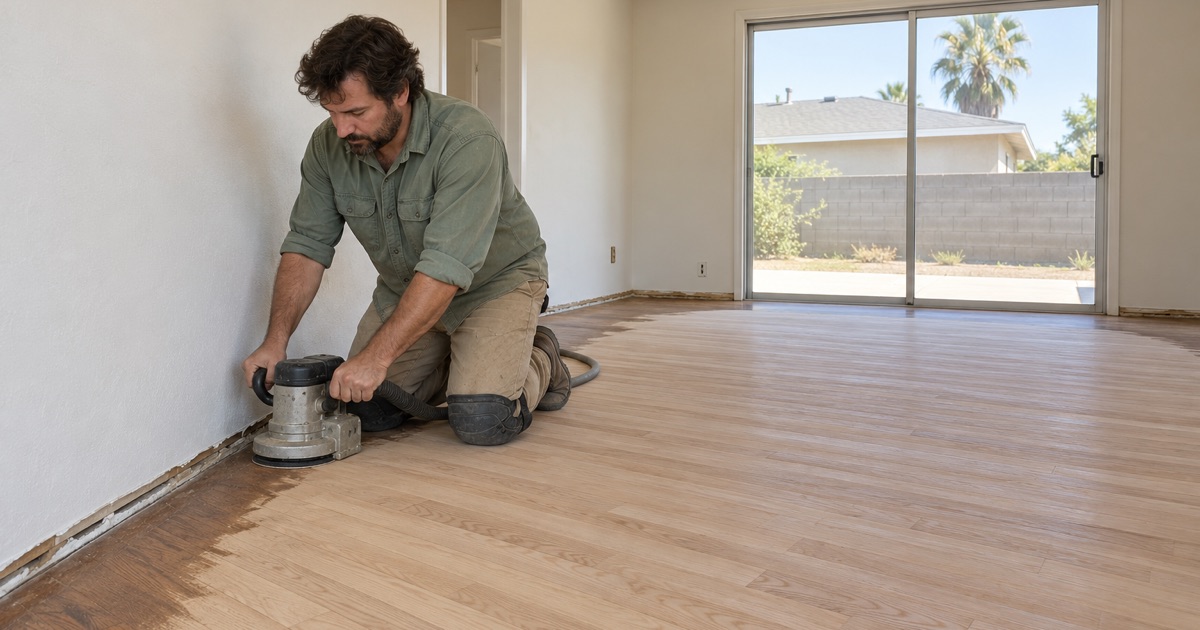
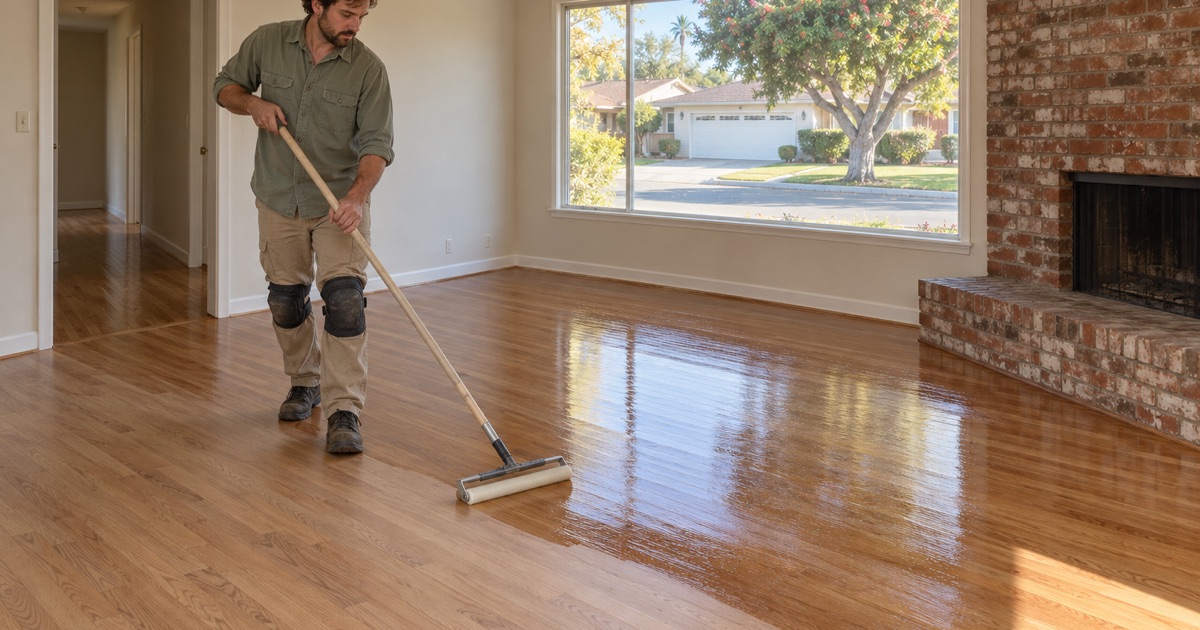
Finish that peels in sheets usually means a new coat went over wax, polish or contamination it could not bond to. Haze and gray traffic lanes mean the finish is worn and the wood is next in line. Depending on how far it has gone, a screen and recoat or a full sand brings the floor back.
Red Oak That Has Turned Orange
Red oak under an older oil-modified polyurethane ambers over time, and the orange color change is one many homeowners want reversed. Sanding to bare wood and switching to a waterborne finish, with or without stain, resets the color. We lay samples on your own floor before the whole room is finished.